A pride flag is any flag that represents a segment or part of the LGBT community. Pride, in this case, refers to the notion of gay pride. The terms LGBT flag and queer flag are often used interchangeably. The rainbow flag is the most widely used LGBT flag and LGBT symbol in general. The rainbow flag’s derivations are used to focus attention on specific similar-interest groups within the community. Some pride flags are not exclusively related to LGBT matters, such as the polyamory flag.
The original rainbow flag, called the Freedom Flag, was devised by Gilbert Baker in 1978. The design has undergone several revisions since its debut with eight colored stripes, and currently, the most common variant consists of 6 stripes: red, orange, yellow, green, blue, and violet. Using a rainbow flag as a symbol of gay pride began in San Francisco, California, but eventually became common at LGBT rights events worldwide.
The popularity of the rainbow flag has influenced the creation and adoption of a wide variety of multi-color multi-striped flags used to communicate specific identities within the LGBT community, including the bisexual pride flag, pansexual pride flag, and the transgender pride flag.

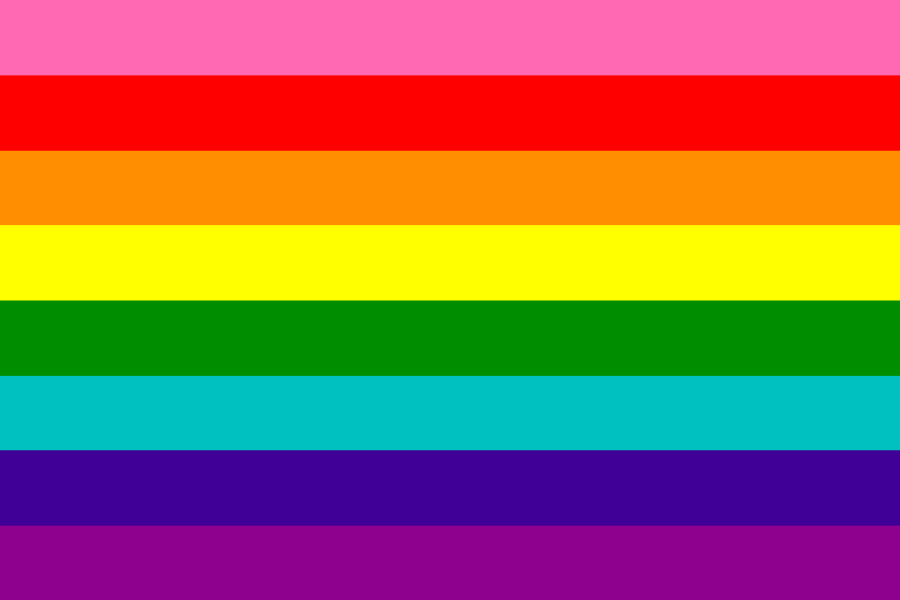
Picture of Gilbert Baker’s original Freedom Flag showing the meaning of the eight colors. The eight colors (from top to bottom) are Hot Pink for sexuality, Red for life, Orange for healing, Yellow for sunlight, Green for nature, Turquoise for magic, Blue for serenity, and Violet for spirit.
The well-known rainbow-colored flag symbolizes lesbian, gay, bisexual, and transgender (LGBT) pride and LGBT social movements. The rainbow flag, also known as the gay pride flag or LGBT pride flag, reflects the sexual diversity of the LGBT community and the spectrum of human sexuality and gender.
- Fun With Flags: Pride Flags & What They All Mean
- The Rainbow Gay Pride Flag
- Transgender Pride Flag
- Labrys Pride Flag
- Pansexual Pride Flag
- Asexual Pride Flag
- Bisexual Pride Flag
- Genderqueer Pride Flag
- Gender Fluid Pride Flag
- Bear Brotherhood Flag
- Leather Pride Flag
- Queer People of Color (QPOC) Flag
- Progress Pride Flag
- Rubber Pride Flag
- Two Spirit Pride Flag
- Intersex Pride Flag
- Feather Drag Pride Flag
- The Straight Ally Pride Flag
- Nonbinary Pride Flag
- Agender Pride Flag
- Polysexual Pride Flag
- Aromantic Pride Flag
- Lesbian Pride Flags
- Butch Lesbian Pride Flag
- Lipstick Lesbian Flag
- Bigender Pride Flag
- Polyamory Pride Flag
- Pangender Pride Flag
- Genderfae Pride Flag
Fun With Flags: Pride Flags & What They All Mean
The Rainbow Gay Pride Flag
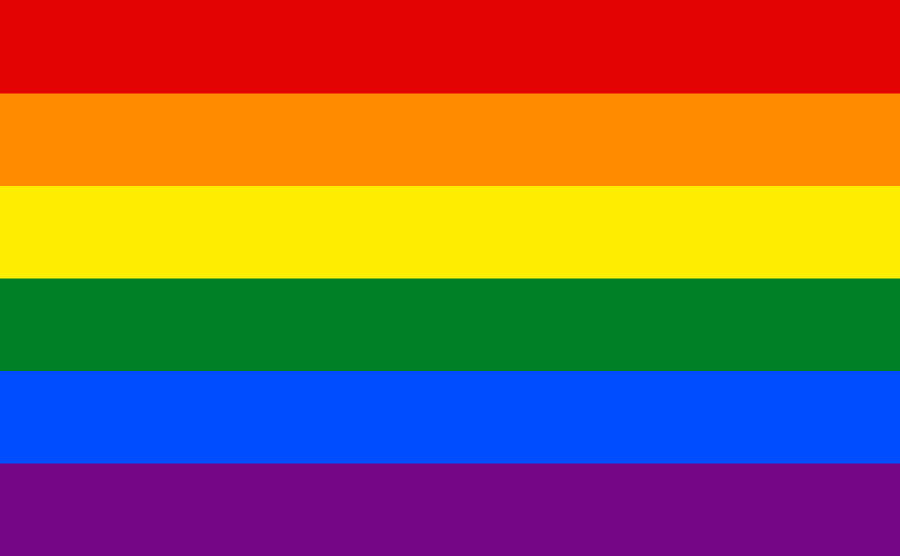
The current six stripe version of the rainbow pride flag’s LGBTQ+ colors have specific meanings. Each color represents and celebrates an aspect of LGBTQ+ pride:
- Red = Life
- Orange = Healing
- Yellow = Sunlight
- Green = Nature
- Indigo = Harmony/Serenity
- Violet = Spirit
Previous Seven Stripe Rainbow Flag

Previous Eight Stripe Rainbow Flag
Transgender Pride Flag
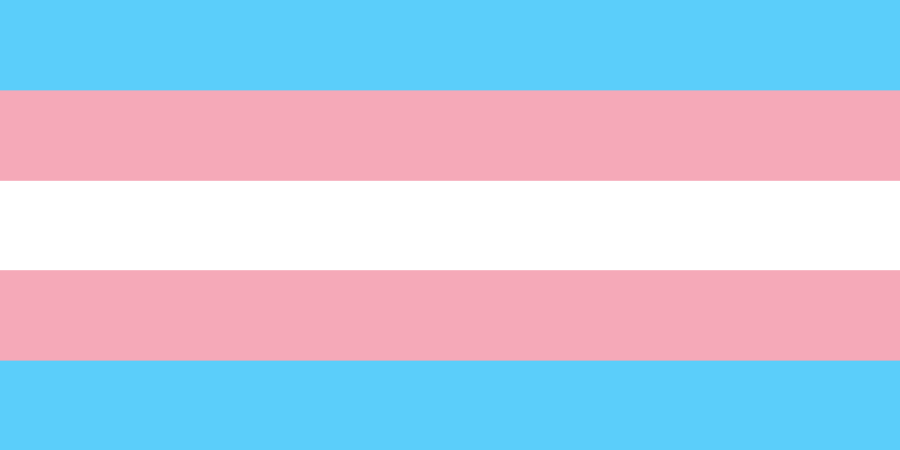
The Transgender Pride flag stripes at the top and bottom are light blue, the traditional color for baby boys. The stripes next to them are pink, the traditional color for baby girls. The stripe in the middle is white for those transitioning or considering themselves to have a neutral or undefined gender.
Labrys Pride Flag

The Labrys Pride Flag is a symbol for the lesbian feminist community and was adopted in the 1970s by lesbian feminists as a symbol representing strength and empowerment. The original Labrys Pride flag was created in 1999 by graphic artist Sean Campbell and first used in 2000 as a visual element for the Pride issue of the Gay and Lesbian Times newspaper (Palms Springs edition).
Pansexual Pride Flag

The Pansexual Pride Flag consists of pink, yellow, and blue stripes and does not generally use the Pansexual symbol in its design. It was first created in 2010, but it is still being determined who the original designer was. The purpose of the Pansexual flag design was to separate the pansexual community from the bisexual community because the two are often confused with one another.
Asexual Pride Flag

In August 2010, after a debate over having an asexual flag and how to set up a system to create one, and contacting as many asexual communities as possible, a flag was announced as the asexual pride flag.
The flag consists of four horizontal stripes: black, grey, white, and purple from top to bottom.
- The black stripe represents asexuality.
- The grey stripe represents the grey area between sexual and asexual.
- The white stripe sexuality.
- The purple stripe community.
The flag colors have been used in artwork and referenced in articles about asexuality.
Bisexual Pride Flag

The bisexual flag is a pride flag representing bisexuality, bisexual individuals, and the bisexual community. Bi-rights activist Michael Page created the pink, purple, and blue Bisexual Pride Flag in 1998. Michael made the flag so that the bisexual community could have more visibility in the culture rather than just the rainbow flag.
Bisexuals are attracted to people of the same gender and people of different genders. In other words, they’re attracted to 2 or more genders. A 2021 Gallup poll found that more than half of LGBT adults (54.6%) identify as bisexual.
What the Bisexual Flag Colors Mean
This Bisexual Flag consists of a magenta stripe at the top representing same-gender attraction, a broad blue stripe at the bottom representing opposite-gender attractions, and a narrower purple band occupying the fifth central area, which represents attraction toward both genders. The pink stripe takes up two-fifths of the flag, the purple stripe takes up the middle fifth, and the blue stripe takes up the other two-fifths.
- Pink: Attraction to people of the same gender
- Purple: Attraction to two or more genders
- Blue/Lavender: Attraction to people of a different gender
Genderqueer Pride Flag

The Genderqueer flag was designed by Marilyn Roxie in 2011, an advocate for genderqueer rights. It was originally intended to represent the genderqueer and non-binary groups. Still, when a separate non-binary flag was created, this version became more specifically associated with the genderqueer community. The Genderqueer flag colors are similar to the British Suffragette Flag, sometimes used by TERFs online.
The term genderqueer originated in queer zines of the 1980s as a precursor to the term non-binary. Today, non-binary or genderqueer is an umbrella term for gender identities that are not solely male or female – identities that are outside the gender binary. Non-binary identities fall under the transgender umbrella since non-binary people typically identify with a gender different from their assigned sex. However, some non-binary people do not consider themselves transgender.
As the combination of the traditionally masculine and feminine colors (blue and pink), lavender represents androgyny and other queer identities. In contrast, white stands for agender identity, and the green represents those defined outside the binary. The purpose of the flag is to help create visibility for the genderqueer community and related identities.
What the Genderqueer Flag Colors Mean
- Lavender: The mixture of blue and pink (traditional colors associated with men and women, present on the transgender pride flag) as lavender represents androgynes and androgyny. It also represents the “queer” in genderqueer, as lavender is a color that has long been associated with “queerness,” including gay, lesbian, and bisexual communities.
- White represents agender identity, congruent with the gender-neutral white on the transgender pride flag.
- Dark Chartreuse Green: The inverse of the lavender color; meant to represent “third gender” identity, i.e., those whose identities are defined outside of and without reference to the binary.
The Genderqueer flag colors are not meant to indicate that any of these identities are entirely separate or opposites of one another conceptually; they are all interrelated and key concepts in their own right.
Gender Fluid Pride Flag

Gender Fluid people often desire to remain flexible about their gender identity rather than committing to a single definition. They may fluctuate among different gender expressions over their lifetime or express multiple aspects of various gender markers simultaneously, such as feeling more feminine or masculine, bi-gender or agender, maverique or neutrois, and demigender or polygender. A genderfluid person may also identify as bigender, trigender, or pangender.
Created by JJ Poole in 2012 to represent folks whose gender identity and expression is fluid and may fluctuate at different times or in different circumstances, the Gender Fluid flag consists of five stripes, pink, white, purple, black, and blue. It is believed that Poole created the flag so that the gender-fluid community could have a symbol other than the genderqueer flag.
What the Gender Fluid Flag Colors Mean
- Pink: Represents femininity or feeling female.
- White: Representing the lack of gender.
- Purple: Represents a combination of masculinity and femininity, including various degrees of androgyny.
- Black: Represents all other genders, third genders, and pangender.
- Blue: Represents masculinity or feeling male.
Bear Brotherhood Flag
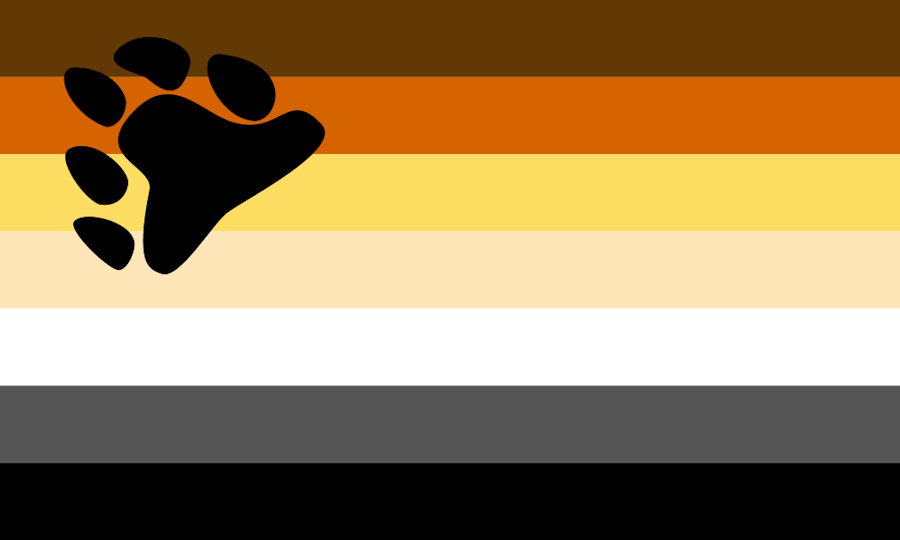
The Bear Brotherhood pride flag was designed to represent the bear subculture within the broader LGBTQ+ community. Craig Byrnes created the bear flag in 1995. He thought it would be fitting to design a flag that represents the bear community and include it with the results of his research. The International Bear Brotherhood Flag, also known as the bear flag, is a pride flag designed to represent the bear subculture within the LGBT community.
A bear within gay male culture refers to a large-sized hairier man who projects a sense of “rugged masculinity” and an emerging subset of the LGBT community with its events, codes, and a culture-specific identity. Bears tend to have hairy bodies and facial hair; some are heavy-set; some project an image of working-class masculinity in their grooming and appearance, though none of these are requirements or unique indicators.
What the Bear Brotherhood Flag Colors Mean
The flag consists of seven horizontal stripes. The flag colors are brown, orange, yellow, tan, white, grey, and black. – are meant to include the colors of the furs of animal bears throughout the world. To further represent the bear community, a black bear paw print is included at the top left of the flag.
Leather Pride Flag

The leather pride flag is a symbol used by the leather subculture since the 1990s. It was designed by Tony DeBlase, who first presented the design at International Mister Leather in Chicago on May 28, 1989. The gay leather community quickly embraced the leather pride flag. It has since become associated with Leather in general and also with related groups such as the BDSM community.
Also known as black and blue with love, the leather pride flag is not associated with any particular sexual orientation – though it’s used most commonly by gay men – instead indicates an interest in kink. The leather subculture is somewhat hard to define as it encompasses various activities. In general, they all involve two things: leather and sex, although, in modern times, it’s also used for BDSM – which doesn’t necessarily include leather.
Despite its popularity in the gay leather scene, the flag is not just a gay symbol; it symbolizes the whole leather community.
What the Leather Pride Flag Colors Mean
The flag comprises nine horizontal stripes of equal width. The alternate stripes are black and royal blue from the top and bottom. The central stripe is white. In the upper left quadrant of the flag is a large red heart. DeBlase has stated that he intends for each person to interpret the shapes and colors of the Flag as they wish.
Queer People of Color (QPOC) Flag
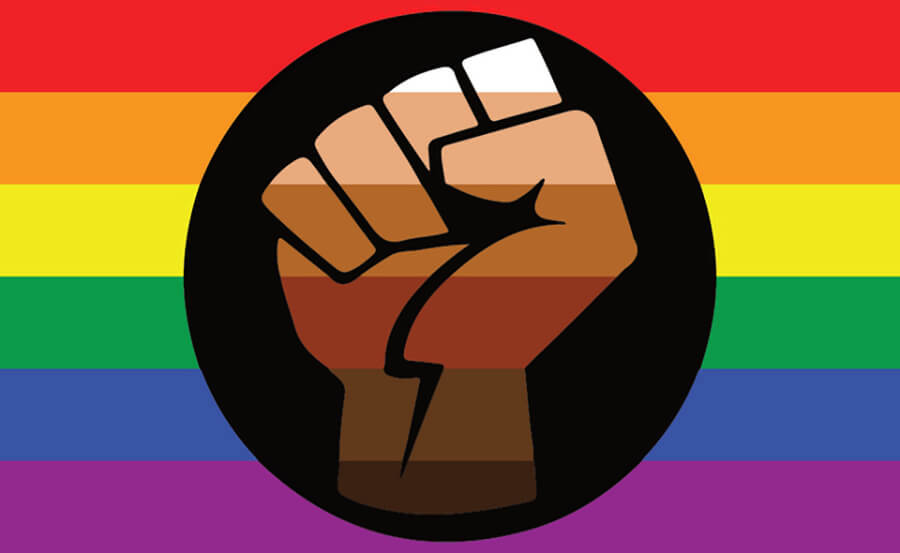
The origin of the Queer People of Color Flag is unknown, but the flag represents solidarity with the Black Lives Matter (BLM) movement and the intersection of the queer and Black communities. The flag gained notoriety in 2020 during the height of the BLM movement. The flag represents queer people of color (QPOC) and how the black community and the queer community are often woven together, both currently and in the earliest days of the Queer Liberation Movement.
The flag has become increasingly popular over the years. The raised fist sign represents unity and support as well as defiance and resistance, and the various colors of the fist represent diversity.
The Queer People of Color Flag is sometimes called the Resistance Flag, according to Them writer Matt Baume: “The modern LGBTQ+ liberation movement was touched off by queer and trans people of color, and their struggle continues to this day, with both communities seeking justice, equality, and freedom from oppression. And because many people belong to both communities, they’re not two distinct causes but instead overlap.”
The flag’s use has mostly been in the digital sphere, but it was flown at the 2019 San Francisco Pride.
What the Queer People of Color Flag Colors Mean
In addition to the color-coded stripes listed below, a raised fist in varying shades of brown representing unity and support as well as defiance and resistance was added to the six-striped rainbow flag to represent the various colors of the “human rainbow.”
Progress Pride Flag


The Progress Pride flag includes black and brown stripes to represent marginalized LGBTQ+ communities of color, as well as the colors pink, light blue and white, which are used on the Transgender Pride Flag.
The Progress Pride flag was created in 2018 by Oregon-based designer Daniel Quasar, both genderqueer and non-binary, in response to Philly’s updated pride flag. Quasar added a five-colored chevron to the classic Rainbow Flag to emphasize inclusion and progression. The flag’s design combines the colors and stripes from Philly’s version of the pride flag and the colors of the transgender pride flag.
Quasar is quoted as saying, “When the Pride flag was recreated to include both black and brown stripes as well as the transgender stripes, I wanted to see if there could be more emphasis in the design of the flag to give it more meaning.”
Newer Version
A newer version of the progress pride flag (as seen in the second image below) represents those who are intersex, people of color, and people living with AIDS was designed in 2021 by Valentino Vecchietti of Intersex Equality Rights UK, who added a yellow triangle with a purple circle (the design of the Intersex Pride Flag) to the Progress Pride Flag.
What The Progress Pride Flag Colors Mean
The white, pink, and light blue chevron design on the Progress Pride Flag reflects the colors of the Transgender Flag, while the brown and black stripes represent marginalized people of color. The black stripe has a dual meaning: It also honors those lost to HIV/AIDS and is a nod to the stigma surrounding those still living with HIV.
The Progress Pride flag features eleven primary colors, red, orange, yellow, green, indigo, violet, white, pink, blue, brown, and black. The flag incorporates five half-sized diagonal stripes that represent transgender and non-binary individuals (light blue, light pink, white), marginalized People of Color (POC) communities (brown and black), those living with AIDS and the stigma and prejudices surrounding them, and those who have been lost to the disease (black).
Rubber Pride Flag

hile not representing any specific sexual orientation or gender identity, this flag, often seen at pride parades, represents the rubber or latex fetish subculture in the LGBTQ+ community.
The Rubber Pride flag, also known as the Latex Pride flag, is a symbol used by rubber and latex fetish community members. It was designed in 1994 by Peter Tolos and Scott Moats. According to the pair, the black color on the flag represents leather; the red symbolizes the group’s “blood passion for rubber and rubbermen,” and the yellow stands for their “drive for intense rubber play and fantasies.” And yes, the design is a literal kink.
What the Rubber Pride Flag Colors Mean
- Black represents the desire for the latex/rubber look and feel of leather itself
- Red represents passion for rubber and rubbermen (a term used to describe gay men with a fetish for rubber)
- Yellow represents a drive for intense rubber play and fantasies
Two Spirit Pride Flag
Two-spirit (two spirit, 2S, twospirited) is a modern, pan-Indian, umbrella term used by some Indigenous North Americans to describe Native people in their communities who fulfill a traditional third-gender – or other gender-variant – ceremonial and social role in their cultures. Some Indigenous Americans identify as two-spirit individuals, meaning they fall outside the male-female binary. This can describe a person’s sexual, gender, and spiritual identity.
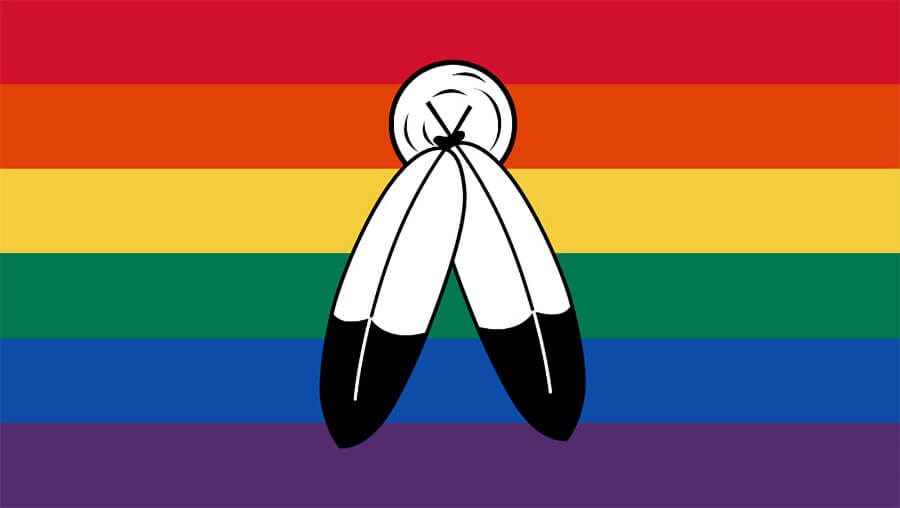
The Two-Spirit culture is not, as some would believe, the gay community among Native Americans. It is more cultural among indigenous people, like the Hijra group in South Asian society. Though it’s not clear when it was first designed, the flag, however, does take its inspiration from the famous Rainbow Pride Flag. Cultural context is added by placing a double feather symbol in the middle to stand for the Native American community.
“Two Spirit” was not intended to be interchangeable with “LGBT Native American” or “Gay Indian”; rather, it was created in English (and then translated into Ojibwe) to serve as a pan-Indian unifier, to be used for general audiences instead of the traditional terms in Indigenous languages for what are diverse, culturally-specific ceremonial and social roles, that can vary widely (if and when they exist at all).
What the Two-Spirit Pride Flag Colors Mean
The Two-Spirit Pride Flag uses two feathers to represent masculine and feminine identities. The circle symbolizes the unification of masculine and feminine identities into a separate gender. The Two-Spirit flag has eight primary colors, which are red, orange, yellow, green, indigo, violet, black and white.
Intersex Pride Flag
Intersex people, the older term for this condition is hermaphroditism, are individuals born with any of several sex characteristics, including chromosome patterns, gonads, or genitals that, according to the Office of the United Nations High Commissioner for Human Rights, “do not fit typical binary notions of male or female bodies”.
Intersex is a general term used for a variety of situations in which a person is born with reproductive or sexual anatomy that doesn’t fit the boxes of “female” or “male.” For example, a person might be born appearing to be female on the outside but having mostly male-typical anatomy on the inside. Or a person may be born with genitals that seem to be between the usual male and female types. For example, a girl may be born with a noticeably large clitoris or lacking a vaginal opening; a boy may be born with a notably small penis or a scrotum that is divided so that it has formed more like labia. Or a person may be born with mosaic genetics, so that some of her cells have XX chromosomes and some of them have XY.
Sometimes doctors do surgeries on intersex babies and children to make their bodies fit binary ideas of “male” or “female.” But, just like with non-intersex people, that doesn’t mean that’s the gender identity they’ll grow up to have. It has been estimated about 1-2 in 100 people born in the U.S. are intersex.
The Intersex Pride Flag had existed since 2013, when Morgan Carpenter, then co-chair of Intersex Human Rights Australia, created and launched it. Unimpressed with some other symbols for intersex individuals, Carpenter wanted a flag “that is not derivative but is yet firmly grounded in meaning,” and he eventually landed on the version we know today. Various media and human rights organizations have utilized the flag.
Carpenter said of the flag, “We are still fighting for bodily autonomy and genital integrity, and this symbolizes the right to be who and how you want to be.”
In 2021, the intersex flag was incorporated into the Progress Pride version of the rainbow pride flag by Valentino Vecchietti of Intersex Equality Rights UK.
What the Intersex Pride Flag Colors Mean
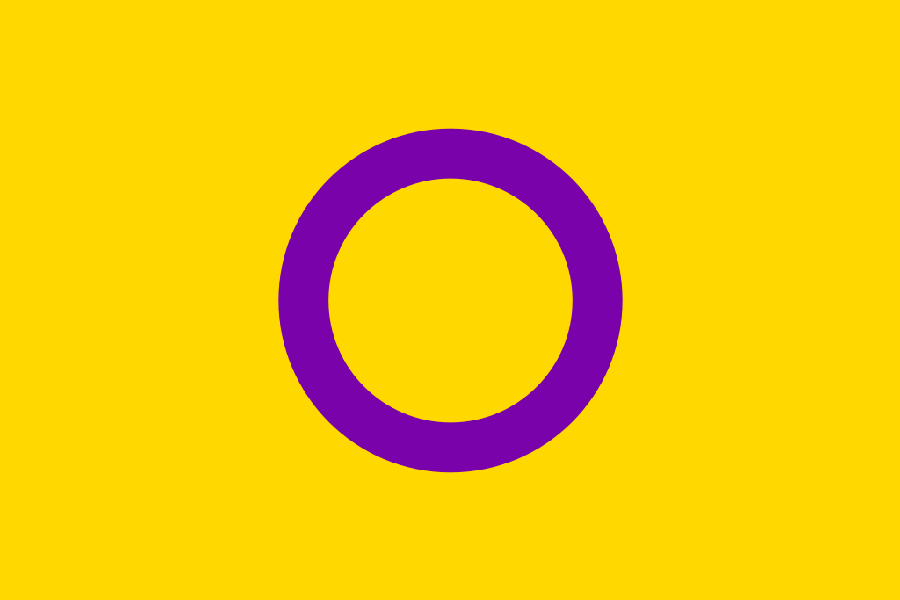
The Intersex Pride flag features a purple circle on a yellow background. Morgan Carpenter, the designer of the flag, used yellow and purple because the colors are seen as gender-neutral, and the circle represents wholeness and completeness.
Feather Drag Pride Flag

The Feather Drag Pride Flag is a flag you may have seen flown at pride festivals worldwide. The Feather Pride Flag is a symbol of the Drag community. Artist Sean Campbell created it in 1999. It was used for the first time in a pride edition of GLT magazine in 2000.
The Feather Drag Pride Flag is a symbol for the Drag community, encompassing those who are into Drag Queens, Fancy Kings, their courts, and fetishes. The phoenix that the gay community has embraced as a symbol of rebirth is symbolic of the fires of passion the drag community had in the early days of the HIV/AIDs epidemic, raising funds for research within the gay community.
The Straight Ally Pride Flag

A straight ally or heterosexual ally (ally) is a heterosexual and/or cisgender person who supports equal civil rights, gender equality, and LGBT social movements, challenging what they perceive as homophobia, biphobia, and transphobia.
The black, white, and rainbow Straight Ally pride flag shown below has an unknown origin but is known to have first turned up around the late 2000s. The Straight Ally Pride flag should not be confused with the strictly black and white “straight pride” flags. The Ally flag represents support for the LGBTQ+ community and celebrates the sexualities of others, while the “straight pride” flag negatively protests the Pride movement.
The Stages of Being an Ally
There are said to be three stages of being an ally in any social movement:
1 – The first stage of allyship is rooted in self-interest. These allies’ goals focus entirely on those they love. Self-interested behavior is most often associated with parents supporting their children. Although these parents are key supporters in the community, it is sometimes clear whether their help extends beyond their own family and friends.
2 – The second stage is that of the ally aspiring for altruism. This is a more advanced stage than the former because the ally’s motivations are directed toward combating the oppression of an entire group instead of just one individual. They are also more established in the sense that allies at this level begin to show awareness of their societal privilege, yet they tend to assume a savior role toward those they aim to help.
3 – The third stage of allyship is the ally who fights for social justice. Above all else, the main driver of this stage is respect for oppressed people. In contrast to the prior two approaches, allies in the third stage know that the group they support can advocate for themselves.
What The Straight Ally Pride Flag Colors Mean
- The “A” shape represents allyship.
- The black and white stripes represent straight and/or cisgender allies.
- The rainbow colors in the “A” shape represents solidarity with the LGTBQ+ community.
Nonbinary Pride Flag
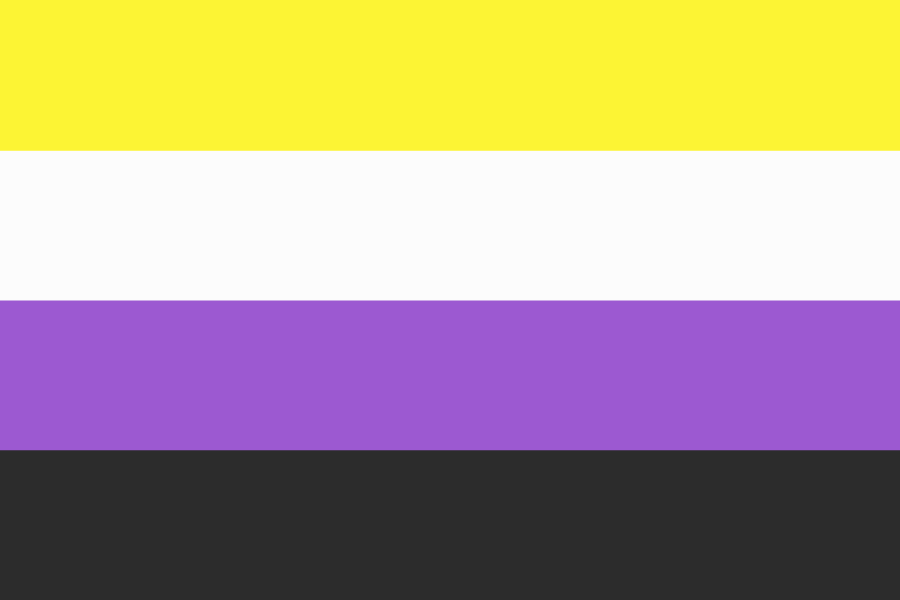
Non-binary is an umbrella term for people whose gender identity doesn’t sit comfortably with ‘man’ or ‘woman.’ Non-binary identities are varied and can include people who identify with some aspects of binary identities while others reject them entirely. While many non-binary genders have their terms, feelings, and flags, some use the term non-binary to describe their gender experience without adopting or using a more specific term.
The Nonbinary Pride Flag
Kye Rowan created this non-binary pride flag at age 17 in February 2014 in response to a call from several community members who didn’t feel adequately represented by the genderqueer flag. The flag was created to represent nonbinary people whose gender identity does not fit within the traditional male/female binary. The goal wasn’t to replace the Genderqueer Pride Flag but to fly the Nonbinary Pride Flag alongside it.
Agender Pride Flag
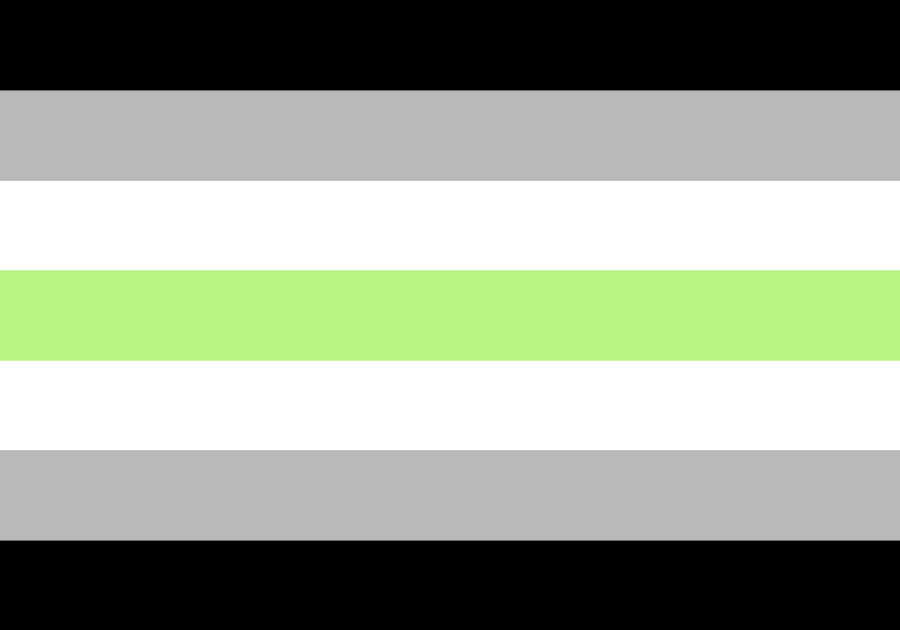
Created in 2014 by New York-based artist and activist Salem Fontana, first seen on Tumblr in February 2014. The Agender Pride Flag represents people who identify as having no gender, an unidentifiable gender, or gender-neutral. For their flag, the black and white stripes represent the absence of gender, while green, the inverse of the gender-heavy purple, represents nonbinary genders.
Agender Pride Flags are designed to be reversible, like other LGBTQ+ flags such as the Transgender Pride Flag, so that the stripes will be in the correct order no matter which way they fly.
There are a total of seven stripes: two black, two gray, two white, and one green, with each color having its meaning. The flag features a green stripe, which is the opposite of purple. This color strongly relates to gender due to it being a combination of the traditionally masculine blue and feminine pink. Whereas Green is seen as a genderless color.
- Black Stripes = Absence of gender.
- White Stripes = Absence of gender.
- Gray Stripes = Semi-genderless. Those who are semi or demi-genderless (people who fall between genderless and gendered)
- Green Stripes = Nonbinary gender identities.
Polysexual Pride Flag

Polysexuality, unlike pansexuality, is the attraction to multiple genders but not all. A middle ground between bisexuality and pansexuality, it is centered more around attractions to femininity and masculinity rather than gender itself.
Created to be like the bisexual and pansexual flags, the Polysexual Pride Flag similarly includes three colored stripes with pink, green, and blue colors. The flag was designed by a Tumblr user, Samlin, in 2012. Samlin created the flag because, at the time, there was no flag to represent the polysexual community. Samlin’s flag design was inspired by the layout of the bisexual and pansexual flags because “they’re all under the multisexual umbrella.”
What the Polysexual Pride Flag Colors Mean
The colors and design of the flag are based on the bisexual and pansexual flags, using blue and pink, and replacing the purple and yellow stripes with a green one.
- Pink = Represents attraction to female-identified people.
- Green = Represents attraction to people who identify outside the traditional male-female binary.
- Blue = Attraction to males. Represents attraction to male-identified people.
Aromantic Pride Flag

An Aromantic is someone who does not experience romantic attraction or does so in a significantly different way than is traditionally thought of.
The Aromantic Pride Flag represents people who either do not experience romantic attraction or do so in a nontraditional way. The color green represents aromanticism and appears in two shades on the flag, along with white, gray, and black. The Aromantic Pride Flag has gone through several designs:
- First Version: The first aromantic pride flag was a four-stripe design with green, yellow, orange, and black. Green represented the opposite of red (the color of romance), yellow played off of yellow flowers, which represent friendship, orange because it was between yellow and red (for grey-romantics), and black was for alloromantics who reject the traditional ideas of romance.
- Second Version: The second aromantic pride flag was a five-stripe design of dark green, light-green, yellow, grey, and black. This design was created by Tumblr user Cameron (@cameronwhimsy) from Australia on February 7, 2014.
- Third Version: The third and most recent design is flown by the Gender and Sexuality Resource Centre (GSRC). The latest design is the most widely accepted version, replacing the yellow of the second flag with a white stripe. This flag was designed by Cameron as well, updating the design on November 16, 2014.
What the Polysexual Pride Flag Colors Mean
While asexual flags use purple to show their lack of sexual attraction, aromantic flags use green to celebrate people without romantic attraction.
- Dark Green Stripe = Represents aromanticism.
- Light Green Stripe – Represents the aromantic spectrum.
- White Stripe = Platonic and aesthetic attraction on the aromantic spectrum.
- Gray Stripe = Gray-romantic and demi-romantic people.
- Black Stripe = Represents the sexuality spectrum.
Lesbian Pride Flags
The word “lesbian” literally means resident of the island Lesbos and became synonymous with women who like women in reference to the island’s most famous resident, Sappho, a female poet who wrote many love poems to other women around 600 BCE. Today, a lesbian is someone who experiences sexual or romantic attraction to other women or between women. The term normally applies to women; however, some nonbinary people also identify with this term.
There are multiple versions of the Lesbian Pride Flag, including the:
- Seven Stripe Lesbian Flag
- Five Stripe Lesbian Flag
- Lipstick Lesbian Flag
- Labrys Lesbian Pride Flag
- Butch Lesbian Pride Flag
- The Lesbian Pride rainbow flag with the Double Venus symbol in a canton.
- Lesbian Pride rainbow flag with white Double Venus.
Seven Stripe Lesbian Flag
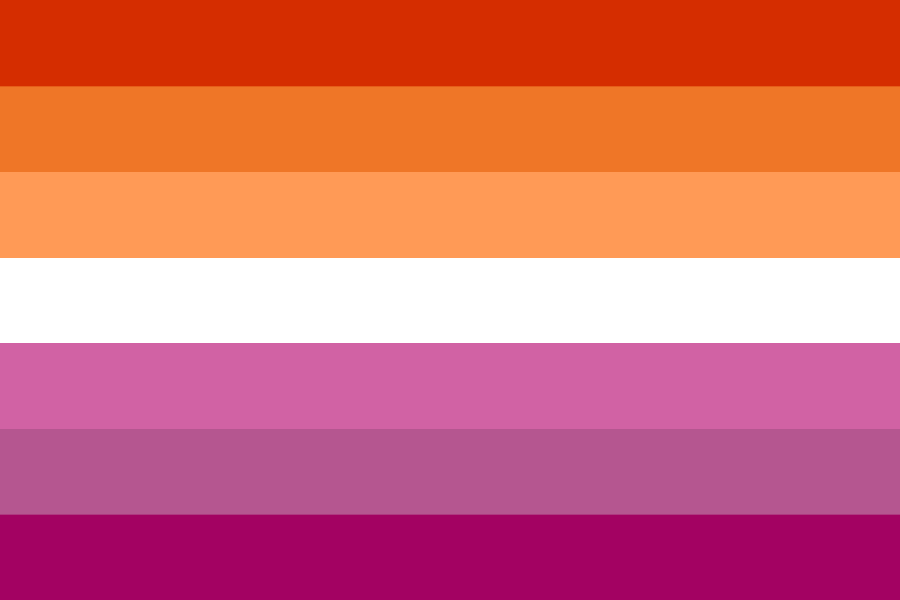
The seven-stripe version has been around since 2018 and was proposed as the new “lesbian flag for everyone” by Tumblr blogger Emily Gwen and currently seems to be the most widely recognized one. The Lesbian Pride flag has seven primary colors, dark orange, orange, light orange, white, pink, dusty pink, and dark rose. The chart further down the page lists the common and popular color codes of these colors in HEX, RGB and CMYK formats.
Five Stripe Lesbian Flag
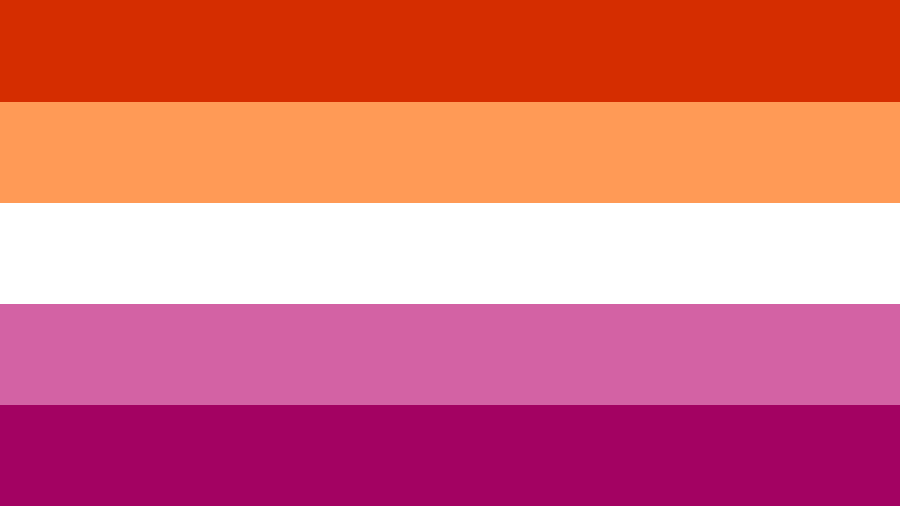
What the Lesbian Pride Flag Colors Mean
The Seven Stripe Lesbian Flag features seven different colors, dark orange, orange, light orange, white, pink, dusty pink, and dark rose, which are said to mean from top to bottom:
- Dark Orange Stripe = Gender nonconformity.
- Middle Orange Stripe = Independence.
- Light Orange Stripe = The lesbian community.
- White Stripe = Relationships unique to womanhood.
- Light Pink Stripe = Peace and serenity.
- Middle Pink Stripe = Love and sex.
- Dark Pink Stripe = Femininity.
Butch Lesbian Pride Flag
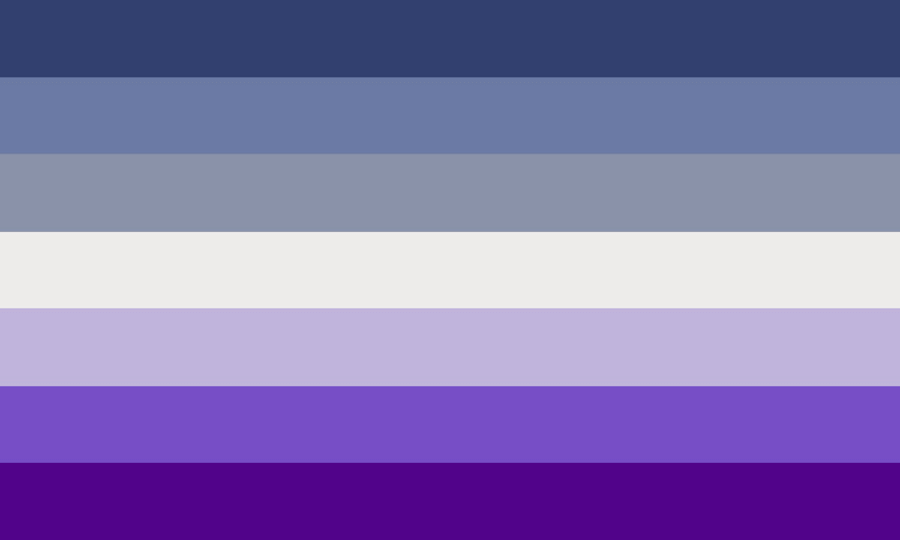
What is a Butch Lesbian?
In lesbian culture, the word ‘butch’ indicates a woman whose gender expression and traits are present as typically ‘masculine.’ Being butch is about playing with and questioning traditional binary male and female gender roles and expressions.
The Butch Lesbian Pride Flag
Before the design of the Butch Lesbian flag, lesbians who fell under the “butch” category did not feel the more feminine Lipstick Lesbian Flag and the lightly colorful Lesbian Pride Flag represented them properly. The lipstick lesbian flag has been criticized for excluding butch lesbians. Some members of the lesbian community do not consider the derivative pink lesbian flag to be inclusive of butches, either.
The butch lesbian flag is one variation of several lesbian flags, including the lipstick lesbian flag and labrys lesbian flag. The first butch lesbian pride flag was created in 2016 by tumbler user Dorian-rutherford using shades of blues and purple. The flag was designed for lesbians who do not identify with the lipstick lesbian flag due to its feminine nature.
Another variation of the butch lesbian flag was created in 2017 by tumbler user butchspace to represent butch positivity using shades of orange. Today, both variations of the butch lesbian flag are slowly gaining traction in the community.
The Butch Lesbian Pride flag was created in the style of the Rainbow Pride Flag and the Lesbian Pride Flag, but with darker, more “masculine” colors as an alternative to the lighter feminine colors of the original. Although the flag designer never explicitly explained the meaning of the colored stripes, people assume blue represents masculinity and purple represents lesbian and woman-identified individuals. White represents people across the gender and sexuality spectrums more broadly.
What is a Butch Lesbian?
In lesbian culture, the word ‘butch’ indicates a woman whose gender expression and traits are present as typically ‘masculine.’ Being butch is about playing with and questioning traditional binary male and female gender roles and expressions.
The Butch Lesbian Pride Flag
Before the design of the Butch Lesbian flag, lesbians who fell under the “butch” category did not feel the more feminine Lipstick Lesbian Flag and the lightly colorful Lesbian Pride Flag represented them properly. The lipstick lesbian flag has been criticized for excluding butch lesbians. Some members of the lesbian community do not consider the derivative pink lesbian flag to be inclusive of butches, either.
The butch lesbian flag is one variation of several lesbian flags, including the lipstick lesbian flag and labrys lesbian flag. The first butch lesbian pride flag was created in 2016 by tumbler user Dorian-rutherford using shades of blues and purple. The flag was designed for lesbians who do not identify with the lipstick lesbian flag due to its feminine nature.
Another variation of the butch lesbian flag was created in 2017 by tumbler user butchspace to represent butch positivity using shades of orange. Today, both variations of the butch lesbian flag are slowly gaining traction in the community.
The Butch Lesbian Pride flag was created in the style of the Rainbow Pride Flag and the Lesbian Pride Flag, but with darker, more “masculine” colors as an alternative to the lighter feminine colors of the original. Although the flag designer never explicitly explained the meaning of the colored stripes, people assume blue represents masculinity and purple represents lesbian and woman-identified individuals. White represents people across the gender and sexuality spectrums more broadly.
Lipstick Lesbian Flag
What is a Lipstick Lesbian?
The term lipstick lesbian was used in San Francisco at least as early as the 1980s. In 1982, Priscilla Rhoades, a journalist with the gay newspaper Sentinel, wrote the feature story “Lesbians for Lipstick.” A lipstick lesbian is a slang term for a lesbian who displays a greater amount of traditionally feminine gender attributes, such as wearing make-up, dresses, or skirts, and having other characteristics associated with feminine women. Unlike a butch lesbian, a lipstick lesbian is a lesbian who prefers a glamorous, traditionally feminine style. The term “lesbian” can be traced to sometime in the 1800s. Before that, the term “sapphic” was used to refer to women who liked other women.
Lipstick Lesbian Flag
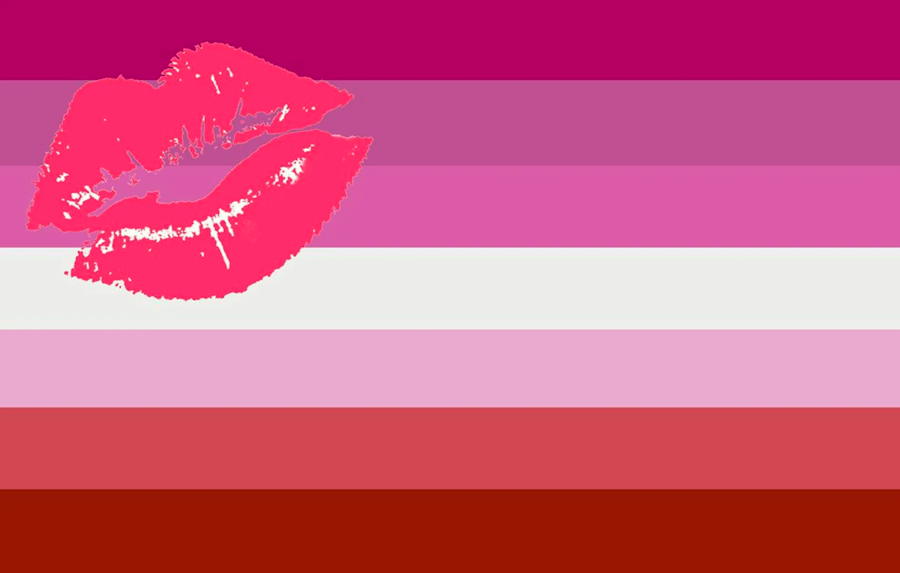
Natalie McCray created the original lipstick lesbian pride flag in 2010 to symbolize the lipstick lesbian sub-group. The original design, which is known as the “lipstick lesbian” flag, includes a red kiss and is introduced in the weblog This Lesbian Life in 2010. Although it’s not a widely used symbol, it celebrates the femmes in the lesbian community, called “lipstick lesbians.” The original lipstick lesbian flag had six shades of pink and red stripes, one white one in the middle, and a red kiss printed on them. The Lipstick Lesbian Flag design does not include butch lesbians, causing the butch group to create their version of the flag known as the Butch Lesbian Pride Flag.
This version of the Lipstick Lesbian pride flag has evolved into different variants of the colors and removal of the red kissing lips – view current versions of the Lesbian Pride Flag. McCray was also allegedly accused of holding transphobic and exclusionist ideals, and most people dropped her Lipstick Lesbian flag design within the community. As far as we know, the colors in her flag design were never explained.
What the Lipstick Lesbian Pride Flag Colors Mean
The Lipstick Lesbian Flag has six shades of pink and red stripes, one white one in the middle, and a red kiss printed on them. The designer did not explain the flag’s colors. But bright red, pink, white, and purple hues are traditionally girly colors.
Bigender Pride Flag
What is Bi-gender?
Bi-gender is a gender identity in which a person has or experiences two genders. The genders may be any combination of two genders, and those genders can be binary (man or woman) or non-binary. They may be experienced simultaneously or alternate, and they may not be experienced equally or in the same way. Some, but not all, bi-gender people experience gender dysphoria, especially if the two genders have markedly different gender expressions.
Bi-gender Pride Flag
There are over twenty variations of the bi-gender flag. We have listed the two most popular versions below.
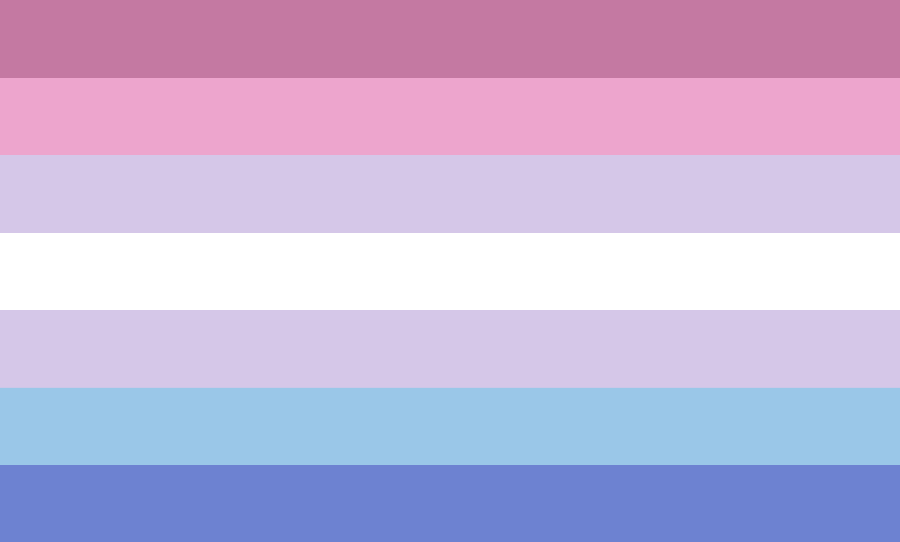
Version 1 – Seven Stripe Bi-gender Pride Flag
Version 1
- The top purple is for all kinds of good relationships.
- Pink / blue stripes are for presentation and the feeling of your identities.
- The white is for your unique bi-gender experience, how it feels and what it’s like. It’s also for understanding each other in this community.
- The bottom purple is about self-respect, pride, and being true to yourself.
Version 2 – Alternative Five Stripe Bi-gender Pride Flag

Version 2
- Pink Stripes = Femininity
- Purple Stripes = A combination of male and female genders
- White Stripe = Non-binary genders
- Blue Stripes = Masculinity
What the Bi-gender Pride Flag Colors Mean
Though the flag’s creator did not add meanings to the colors, it is assumed that pink represents femininity and womanhood, and blue represents masculinity and manhood. The varying shades that meet white in the middle are most likely representative of the nonbinary nature of the bi-gender identity. It has also been stated that this pink, purple, white, and blue Bi-gender Pride flag represents different gender identities, with the white stripe in the middle inspired by the Transgender Pride Flag. We have presented two universally accepted versions of the flag’s color meanings below:
Polyamory Pride Flag

The polyamory pride flag was designed by Jim Evans in 1995. The polyamory pride flag consists of three equal horizontal colored stripes, blue, red, and black, with a gold Greek lowercase letter ‘pi’ in the center of the flag.
Polyamory refers to the ability and desire to be in a consensual relationship with more than one person at once. This is distinct from cheating, which is non-consensual and unethical. People who identify as polyamorous may believe in open relationships with a conscious management of jealousy and reject the view that sexual and relational exclusivity are prerequisites for deep, committed, long-term, loving relationships. Others prefer to restrict their sexual activity to only members of the group, a closed polyamorous relationship that is usually referred to as polyfidelity.
NOTE: Like many other LGBTQ+ themed flags, there are variations of the polyamorous flag. Some variations include removing the pi symbol and replacing it with an infinity heart symbol. The infinite heart symbol has been a recurring aspect of variations of the polyamorous flag – but the original flag, as shown below, is still the most agreed upon and commonly seen.
What the Polyamory Pride Flag Colors Mean
The colors of the stripes of the flag, from top to bottom, are:
- Blue represents the openness and honesty among all partners with whom we conduct our multiple relationships.
- Red, representing love and passion
- Black, representing solidarity with those who, though they are open and honest with all participants of their relationships, must hide those relationships from the outside world due to societal pressures.
- The symbol in the flag’s center is a gold Greek lowercase letter ‘pi,’ as the first letter of ‘polyamory.’
- The letter’s gold color represents the value we place on the emotional attachment to others, be the relationship friendly or romantic, instead of merely primarily physical relationships.
Pangender Pride Flag
Pangender (polygender or omnigender) is someone who feels comfortable with different gender labels and whose gender identity is not limited to one gender and may encompass all genders at once. A pangender person may shift between identities over time or feel as though they have one all-encompassing identity that is unchanging.
What the Pangender Pride Flag Colors Mean
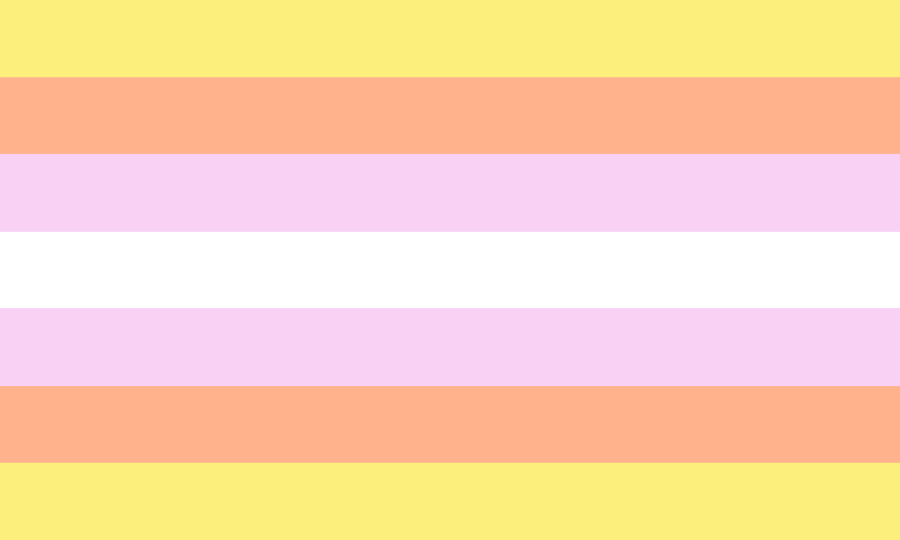
Cari Rez Lobo first proposed the Pangender Pride flag in 2015 on Tumblr, and the suggested pride flags for the Pangender Spectrum are based on the agender pride flag. The Pangender flag has four primary colors: light shades of pink, red, and yellow, as well as a central white stripe.
- Yellow : Symbolizes all genders that aren’t connected to female and male.
- Light red : This means the transition between the female and male genders.
- Light violet/pink : Denotes female and male.
- White : This means the union of all genders.
Genderfae Pride Flag

Genderfae (also called genderdoe or genderthil) is a form of genderfluidity that never encompasses feeling masculine. This is different from the binary gender female because it may include genders other than male and female (aporagender). It can be between male and female (androgyne), the feeling of no gender (agender), or any other non-binary gender. Genderfae individuals tend not to feel mingenders unless said gender is woman-aligned (like azurgirl, for example). Genderfae is under the genderfaer umbrella. Pangenderfae is the static version of genderdoe/genderfae. Someone who identifies as pangenderfae experiences all non-masculine-aligned genders within reason, within knowledge, etc.
The alternative terms genderdoe and genderthil were coined for those who do not want to use “fae.” There is currently a movement to solidify into only using genderdoe or genderthil due to fae being revered in certain cultures.
What the Genderfae Pride Flag Colors Mean
The Genderfae flag has seven primary colors, which are green, green, yellow, white, pink, lavender, and purple. The users superpopcorn101 and Pride-Flags designed the Genderfae Pride flag on Deviantart in 2017. The Genderfae flag colors do not have any specific individual meanings. However, the color range doesn’t include blue to indicate never including masculine genders. A pastel color scheme gave the flag a more “fae” feeling.
 Dustin's Dynasty