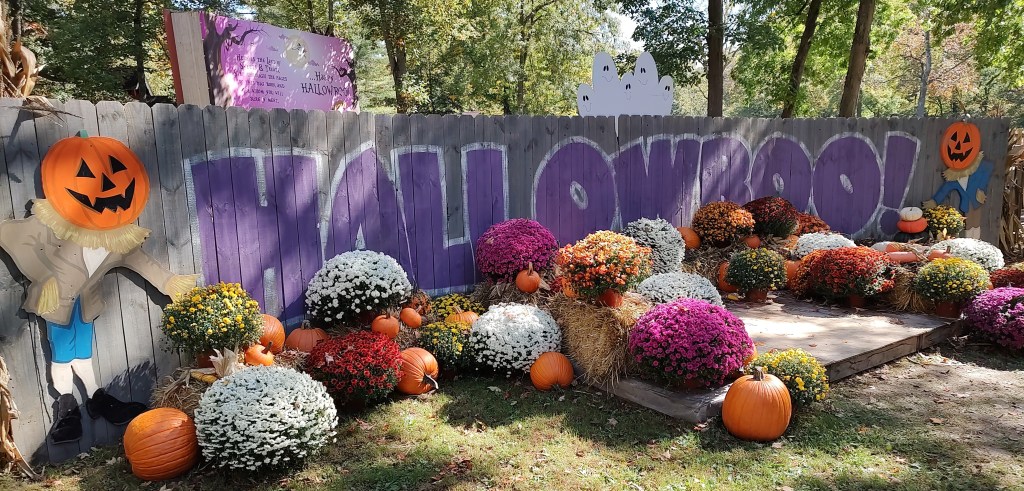
After four years of being away from the local amusement park’s fall celebration, I returned to the park and had one of the best visits that I have had for what I believe has been all my life. As the world has changed for everyone in the past four years, I too have been more in touch with myself and know that I need to do things such as this from time to time.
To give a little backstory, I had been going to this local amusement park most of my life and before COVID, even as my mental health was declining, I was a season pass holder. Then COVID happened and as I and much of the world was in a more fearmongered state than now, I too was very resistant to returning.
Even as the park had made improvements because of the pandemic, I was reluctant to return there because of being overstimulated and being in a heightened state of anxiety for majority of my visits pre-pandemic because of being irritated by the behaviors of others in attendance. Also, not being my best mentally for a very long time in addition to the caffeine counteracting medication intending to help with my challenges of being autistic and having anxiety did not help this at all.
Because my mental health has improved because of making necessary changes over a month ago, I was able to make my recent visit to the amusement park more pleasurable for not only myself but everyone else in my party, despite the venue being very crowded. It was also comforting to see many more individuals with challenges out and about and doing their best to manage the situation just as I was. That in a way felt liberating.
Nonetheless, while this is my experience with my recent visit as it is more relevant with the current state of this world (October 2023), it is not inclusive, yet as either a family member of or an individual with similar challenges, here are some pointers that can help you during your visit to such a venue.
- Do your research before you go: Many tourist attractions of a larger scale offer information on how to accommodate disabled guests. For example, most tourist attractions on their website have an accessibility page where such information can be available. Many amusement parks have a “safety and accessibility guide” that provides information about accommodations for disabled guests. In a modern society, it should be known that not all disabilities have to be visible and as such, staff should be trained properly in how to accommodate the needs of guests that need accommodations.
- This guide usually includes information on:
- The use of mobility devices, if rentals are provided, including
- what is needed to secure a rental.
- Policies regarding service animals
- What “guest services” provides.
- Information on First Aid, Restroom Facilities, and quiet / sensory areas.
- Food and Beverage informationInformation regarding should Personal Care Assistance be required.
- Information regarding the use of oxygen tanks and concentrators
- Loose articles and Smoking areas
- Ride Admission Program (including attraction (ride) eligibility for those with challenging or special needs.
- Information on the alternative access information (boarding passes)
- This guide usually includes information on:
- Know if the venue is Cashless or not: Something new in my age is the fact that not all amusement parks or tourist attractions accept cash payments. For those of my generation or older, this can be a challenge, yet it can be a learning experience. Many of the amusement parks in my area as well as the stadiums and other tourist attractions went cashless and while this can be a challenge, it can also be a fun way to engage financial responsibility.
Most venues provide terminals that accept cash and place it onto a card. Another way that may be helpful so that your financial information is not all out there (as can be scary) is to get a loaded prepaid card either from a store or your financial institution. My mother got a prepaid gift card from our financial institution that had just a fee for the card at half the cost. That way, if the card is lost, only the amount that is on the card can be spent and it isn’t linked to your credit or bank account. - Bring a “go bag”: I have started to accept the fact that even as an adult in my late-30’s I need this to have “comfort or personal items” or needed water and snacks that otherwise could be costly to purchase at the venues. Not all allow you to bring in food and drink unless it is needed medically or for your disability, therefore you should research the policies regarding food and drink before your visit. It should also be noted that some venues require guests to go through a security screening with the potential of a metal detector screen or sometimes be at potential for random search.
- Before or upon arrival, know the lay of the land: When arriving at the venue or attraction, be sure to take pictures of everyone so you are aware of what everyone is wearing should you become separated. Also, it is important to have a map or layout of the venue so you know where things are like the food stands, hydration points and restrooms and whether there may accessibility challenges such as stairs or other obstacles where things are so you can plan your day.
- Know the “peak use” times of venues or attractions / areas of the park.: Of the park we visited, we usually know when the flow of attractions of both newcomers and repeat visitors because of the needs of those in their party. For example, there is a section that gives out treats for the fall and upon our arrival and the line to enter that side of the park was long and backed up because of the photo opportunities of children being in costume provides. Therefore, it may be wise to visit attractions that have low usage during hours other areas have high attendance to offset the noise pollution and sensory overload.
- Plan and Take Care of Yourself: One thing that autistic individuals struggle with is the fact of knowing when to take care of themselves because of everything going on when visiting the venue. This is otherwise known as interoception, the sense of what is going on inside our bodies and when it is known to the individual, it can be too late, thus causing unpleasantness. Therefore, it is important to plan to eat, hydrate, use the restroom, or know when it is time to leave the venue altogether. By having a map or layout of the venue, you can try to plan to the best of your ability when to have such breaks.
This may also be helpful when needing a restroom that is more accessible, accommodating, and appropriate for one’s needs, like a smaller or family assist / gender neutral restroom, for example, to make restroom use more comfortable for the individual. - When all is done, make sure to have some downtime: Burnout is real and not only as children get “worn out”, but autistic adults can also experience autistic burnout. Therefore, it is imperative to not overload one’s day with too much on their agenda and give them time to relax when they get home. For me, this may be a nap and a shower or vice versa dependent on the need to take care of oneself.
These are just some of the examples I feel that I can share with you of my many years of experience as an autistic individual with a host of other challenges. I hope that these few points can help someone else along the journey that they walk down in some way.
 Dustin's Dynasty
Leave a comment